
World's Premier AI Conference, World AI Show - Indonesia 2025, Arrives in Jakarta to Power Southeast Asia's AI Revolution

CIO Review APAC | Thursday, June 26, 2025

Jakarta, Indonesia: Global business events and consulting giant, Trescon is set to host the 45th global edition of the World AI Show on 8–9 July 2025 at the JW Marriott, Jakarta marking a landmark platform for Indonesia’s digital transformation journey. With less than two weeks to go, the summit is already shaping up to be a cornerstone moment in Southeast Asia’s AI development—bringing together national leaders, global technolog y enterprises, emerging startups, and visionary thinkers who are collectively driving the future of artificial intelligence in the region.
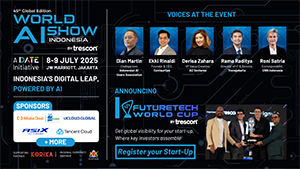
This edition is more than just a continuation of a prestigious global series—it is a pivotal opportunity for Indonesia. As national frameworks such as Stranas KA and Vision 2045 gain momentum, the World AI Show – Indonesia offers a strategic platform for dialogue, investment, and cross-sector partnerships aimed at enabling scalable, responsible AI adoption aligned with national goals.

A Global Platform Backed by Industry Powerhouses

The World AI Show Indonesia 2025 is backed by a powerful ecosystem of global and regional technology leaders, offering unparalleled networking opportunities for delegates and participants. The sponsor lineup is headlined by two of the world’s largest cloud service providers:

● Gold Sponsors:

– Alibaba Cloud|Blue Power Technology
– Tencent Cloud
– UCLOUD Global
– ASIX

● Bronze Sponsor:

– IDStar, a fast-growing IT solutions provider with strong regional expertise.

The exhibition floor will showcase innovative solutions from Intiva, Kouventa, Fastra, Inoventi, Nusantech ,Tictag , InsightGenie and  Mekari offering cutting-edge technologies in AI, data intelligence, automation, enterprise transformation, smart cities, and digital infrastructure.

These partnerships ensure that World AI Show delivers not only global visibility but also meaningful outcomes for sponsors, partners, and delegates through curated networking, media exposure, and access to decision-makers.

Adding to the show’s credibility are high-impact collaborations with influential national and international partners, including:
BritCham Indonesia, KUMPUL, STARFINDO (Asosiasi StartUp for Industri Indonesia), APDI, APAII and Tamilar startup. Together, they bring deep networks and strategic alignment to ensure this platform drives measurable progress across both public and private sectors.

The two-day summit promises a high-value experience with a strong focus on collaboration, innovation, and impact. The agenda is thoughtfully curated to address both immediate industry needs and long-term strategic goals. Key themes includes Strategic Focus on Indonesia's 2045 AI-Driven Digital Economy scaling it to its 10x potential, Covering all bases with strategic insights From Enterprise to Ecosystem,High collaborations, high impact revolutionary and thought provoking ideas within AI advancements . Each session is designed to offer practical insights, policy alignment, and real-world use cases to accelerate implementation across sectors.

Attendees can expect a diverse range of sessions, including:

• Responsible AI and ethical deployment 

• GenAI’s role in enhancing enterprise productivity 

• AI-powered financial services and fraud detection 

• Cybersecurity and data privacy in the AI era 

• Future of work and AI-led workforce transformation 

Distinguished Speakers Driving the Dialogue

This year’s speaker line-up features a strong representation from both the public and private sectors, including:

• Prof. Hammam Riza, President, KORIKA  

• Madame Hj. Diana Dewi,. SE, Chairwoman, The Jakarta Chamber of Commerce and Industry (KADIN Jakarta)

• Arif Ilham Adnan, Co-Chairman, APDI / KADIN Jakarta  

• Vincent Henry Iswara, CEO, DANA Indonesia  

• Restu Kresnadi, Chief Data Officer, Kalbe Farma  

• Sonny Supriyadi, Chief Data Officer, 

• Wilbertus Darmadi, CIO, Toyota Astra Motor  

• Renaldi Tjahaya, Chief Digital Officer, Kawan Lama Group

• Yudhistira Nugraha, Head of Centre for Data & IT, Ministry of Education and Culture  

• Anindio Daneswara, SVP of IT & Digital, PT Semen Indonesia (Persero) Tbk

Leaders from Tiket.com, PT Semen Indonesia, ID Food, Sinar Mas Land, Meratus, and more will also contribute to key sessions—ensuring deep cross-sector engagement.

FutureTech World Cup: The Spotlight on Innovation

A key highlight of the summit is the FutureTech World Cup, to be held on 9 July 2025 at the J.W Marriott, Jakarta. This live pitch competition will feature ten high-potential startups from across Asia, each selected for their innovation, scalability, and impact in sectors such as:

• Artificial Intelligence

• Smart Cities & Urban Tech

• FinTech & Digital Infrastructure

• HealthTech & BioAI

• Climate Tech & Sustainability

These startups will pitch before an elite jury of regional investment leaders:

• Navas Ebin Muhammed, MD & Head of APAC, Mars Growth Capital (Singapore)

• Wiljadi Tan, Managing Partner, Protemus Capital (Indonesia)

• Derisa Zahara, VP of Value Creation, AC Ventures (Indonesia)

• Agung Bezharie Hadinegoro, Partner, Antler (Indonesia)

• Eddy Gunawan, IT Security Expert, PT Pertamina (Persero)

The competition provides not just visibility but a strategic entry point into Southeast Asia’s innovation economy. The winning startup will also advance to the Grand Finale at the Dubai AI Festival 2026, giving them a truly global stage.

Positioned at the crossroads of innovation, regulation, and industry transformation, World AI Show – Indonesia 2025 is not just a conference—it is a strategic catalyst for collaboration, policymaking, and technological progress in the ASEAN region.

From building public-private partnerships to facilitating investor-ready pitches and enabling AI adoption across sectors, this summit is where Indonesia’s AI future takes shape.

“Indonesia’s AI journey demands both innovation and wisdom. Through KORIKA’s leadership, we are shaping an ecosystem that reflects our national values while advancing technological progress. The World AI Show is a platform of both opportunity and responsibility—a chance to ensure our digital transformation is inclusive and impactful,” said Prof. Hammam Riza, President of KORIKA.

Now is the time to position your organisation at the core of Indonesia’s AI movement. Be part of the conversations—and the outcomes—that will define the region’s digital economy for years to come. 

More in News

Banking as a Service (BaaS) has evolved remarkably, propelled by technological advancements and shifting consumer expectations. Conceived initially to facilitate collaboration between banks and non-bank entities, BaaS now stands at the forefront of financial innovation. These technologies enhance operational efficiency and security, enabling unprecedented customization and accessibility in banking solutions. BaaS is poised to continue transforming the economic landscape, offering new opportunities for traditional financial institutions and fintech disruptors. Emerging Banking Industry Trends in BaaS As Banking as a Service (BaaS) continues to expand, it has fostered significant trends within the financial services sector. BaaS drives innovation through collaboration, enabling banks and non-bank businesses to leverage their strengths. Non-bank firms can focus on creating optimized, customer-centric products, while banks provide the regulated, licensed financial infrastructure necessary to support these offerings. This symbiotic relationship fosters an environment where creativity thrives, leading to the continuous evolution of industry offerings. BaaS (Banking as a Service) has enabled digital trends in financial services to flourish, particularly through API-driven ecosystems. From a banking perspective, offering services via APIs extends banks’ reach, creating new revenue streams and growth opportunities. For non-bank businesses, APIs allow the provision of financial services without the need for specific licenses or associated costs. Another emerging trend highlighted by Education Technology Insights is the customization of economic offerings. Flexible APIs empower providers to tailor services to customer demands, delivering more diverse and personalized financial experiences. This evolution in BaaS aligns perfectly with rising consumer expectations for seamless, user-centric banking solutions. Impact of Technological Advancements on the Banking Industry One significant area is artificial intelligence (AI), which transforms the financial landscape in management and decision-making for consumers and providers. AI technology analyzes users' spending habits, offers budgeting advice, and personalizes financial solutions, empowering customers to take control of their financial health. Additionally, AI enhances fraud detection by analyzing vast economic data to identify potential fraudulent activity. It monitors real-time account activity and improves security through biometric authentication measures. Another noteworthy technology trend gaining traction in the industry is Decentralized Finance (DeFi). Utilizing blockchain technology, DeFi enables individuals to conduct financial transactions directly with each other, theoretically eliminating the need for traditional banks and financial service providers. While DeFi offers autonomy and accessibility, it also comes with limitations, including a lack of regulation and potential vulnerabilities to security breaches by thieves and hackers. Advancements in the Internet of Things (IoT) and wearable technology are also worth monitoring. IoT enables banks and financial service providers to enhance their operations by collecting customer data and personalizing their products and services. In the fintech scene, various wearable technologies have emerged, allowing customers to make purchases using phones, watches, rings, and bracelets. These wearables simplify customer transactions while protecting their data, as many require biometric data from the user to authorize payments. As BaaS continues to evolve, driven by AI, DeFi, and IoT, it holds the potential to democratize financial services, making them more personalized, secure, and accessible than ever before. The future promises a landscape where collaboration between banks and non-bank entities, powered by technologies, will shape the next generation of banking experiences. Embracing these trends will be crucial for institutions aiming to stay competitive and meet the evolving demands of modern consumers in the years ahead. ...Read more
FREMONT CA: Managing the large volume of documents generated in the course of day-to-day business activities is one of the primary hidden costs in a paper-based workflow system. Employees in a paper-based environment  spend a significant amount of time retrieving a paper file, performing an action on it, and then re-archiving the file. Moreover, paper, ink, file folders, filing cabinets, filing personnel, and other necessities all cost money. These costs can be significantly lowered by implementing an electronic system that allows personnel to quickly identify and archive documents within seconds. An Electronic Document Management System (EDMS) is a combination of technologies used to generate, capture, disseminate, review, maintain, store, organize, index, retrieve, and dispose of information assets. It includes imaging, document management, and workflow processing. It has the potential to save money and improve workflow. This immediately allows access to documents that necessiates time to transfer from one place to the other through fax or mail for companies expanding to multifarious locations in different geographies. The status of a document within an electronic workflow, unlike paper-based processes, can be easily queried and dogged. An EDMS reduces the chance of losing a document permanently. Accidently deleted documents can be restored in a couple of minutes and electronic documents within an EDMS are backed up from a backup media. For better regulatory compliance, an EDMS's logging records provide valuable information that can be used for auditing. Additionally, an EDMS can be organized and business practices are adjusted to guarantee compliance with regulatory requirements for document storage, access, and retention. Electronically stored records can be accessed considerably quicker than paper documents can be found through physical searches. An enterprise-wide document management system enables better utilization of office space  originally allotted for file storage. An EDMS nearly assures that files will be current and up-to-date with it's efficient scanning and indexing capabilities. Version management for documents and records is also possible with an EDMS. Protecting essential documents from disasters such as fires, floods, or break-ins is considerably easier and more flexible with an EDMS. If sufficient disaster recovery infrastructure and processes are in place, complete recovery from a severe disaster, such as a fire, can be accomplished in a matter of days only if the infrastructure and procedures for disaster recovery are in place. ...Read more
Cloud telephony is a transformative technology that has significantly reshaped business communication, offering substantial benefits to organizations of all sizes. By leveraging cloud capabilities, businesses can streamline operations, enhance customer experiences, and boost overall efficiency. Companies in the APAC region should also consider integrating cloud telephony with their CRM systems, conducting cost analyses, and ensuring compliance with regulations. To take full advantage of the benefits of cloud telephony, it is crucial to understand how to optimize return on investment (ROI) through the integration of AI and machine learning. Businesses can adopt several strategic measures to optimize APAC's cloud telephony ROI. Leveraging Call Analytics is essential, with practices like detailed call recordings to evaluate agent performance, identify training needs, and address customer service or sales gaps. Call quality metrics—such as audio clarity, jitter, and packet loss—ensure seamless customer interactions, while optimized call routing based on call data patterns enables efficient handling. Tracking KPIs, including average call handling time, first-call resolution rates, and customer satisfaction, provides actionable insights into cloud telephony’s impact. Monitoring and optimizing usage requires careful tracking of call volume, duration, and feature utilization to identify trends and uncover opportunities for improvement. Conducting detailed cost analysis helps reduce expenses, especially those related to international calls and usage-based fees, while plan optimization ensures alignment with business requirements and avoids unnecessary costs from underutilized features. In this context, Preempt Life  supports usage optimization and cost efficiency through its expertise in aligning technology strategies with operational needs. Encouraging employees to adopt advanced functionalities such as call forwarding, voicemail-to-email, and click-to-call can further enhance productivity while controlling overall expenditures. Scalability and Flexibility remain crucial as cloud telephony scales dynamically with fluctuating business demands. It seamlessly supports remote work through softphones, video conferencing, and unified communications. Disaster recovery plans ensure operational continuity during disruptions. SwitchDin provides solutions supporting usage optimization, cost efficiency, and feature utilization across modern energy and technology-driven operational environments. Integration with Other Systems is another powerful approach. Integrating cloud telephony with CRM systems enhances customer interactions while connecting with other applications like accounting, marketing automation, and helpdesk systems promotes workflow efficiency. Continuous Improvement ensures long-term value. Regularly reviewing cloud telephony implementation helps identify improvement areas, while employee feedback reveals needs and challenges, fostering an adaptive approach. Considerations for APAC Businesses in Cloud Telephony Businesses must address specific factors to ensure seamless operation when selecting a cloud telephony solution in the APAC region. Regulatory Compliance is paramount; companies should confirm that their chosen solution adheres to local regulations, including data privacy laws like GDPR for EU interactions and data localization mandates in certain APAC countries. Language and Cultural Nuances are also crucial; selecting a provider with multi-language support and cultural awareness enhances communication with diverse market segments. Given the region’s vulnerability to natural disasters, robust Disaster Recovery and Business Continuity planning is essential to maintain service stability during unforeseen disruptions. Cost considerations should not be overlooked; businesses should evaluate Cost Optimization strategies, considering local and international calling fees and usage-based charges. Support and Maintenance are critical; an experienced support team is indispensable for troubleshooting, training, and maintaining the cloud telephony infrastructure. Emerging Trends in APAC Cloud Telephony Cloud telephony in APAC is evolving with new technological advancements. Artificial Intelligence (AI) and Machine Learning (ML) drive features like automated call routing, speech-to-text transcription, and sentiment analysis, improving service quality and efficiency. Integrating the Internet of Things (IoT) in cloud telephony enables innovative applications like remote asset monitoring and control. Moreover, Cloud-Based Contact Centers offer scalable, multi-channel solutions for managing customer interactions via voice, chat, and email. Unified Communications (UC) platforms are also gaining traction, combining voice, video conferencing, messaging, and file sharing in a single interface, streamlining business communications. In today’s competitive business landscape, cloud telephony has become a strategic necessity for organizations aiming to elevate customer experiences, streamline operations, and foster growth. Businesses in the APAC region can unlock the full potential of cloud-based communication solutions by optimizing ROI through advanced call analytics, usage monitoring, and scalable features. Understanding the region's unique considerations and emerging trends allows organizations to make informed decisions, implement best practices, and realize measurable benefits. By embracing cloud telephony and maximizing its capabilities, businesses can position themselves for sustained success in the digital era. ...Read more
Enterprise leaders evaluating ERP implementation services face a persistent tension between system adoption and business relevance. Many deployments still mirror software configuration exercises rather than business transformation efforts, leaving organizations with tools that capture data but fail to guide decisions. This gap becomes more visible in mid-sized and growing enterprises, where legacy spreadsheets, siloed applications and fragmented reporting structures continue to influence critical decisions despite increasing system investments. Effective ERP implementation must begin with a clear translation of business intent into system design. Systems that are shaped around existing workflows, financial realities and decision priorities tend to deliver earlier clarity and sustained adoption. When implementations are driven purely by technical templates, organizations often encounter delays, budget drift and underutilized functionality. A disciplined approach requires grounding system architecture in real operating conditions, ensuring that financial, operational and analytical layers align with how the business actually runs rather than how software is structured. Execution speed has also become a defining factor. Lengthy ERP rollouts introduce risk not only in cost but in organizational fatigue. Momentum tends to decline as timelines stretch, increasing the likelihood of excessive customization and misaligned expectations. Faster deployment models that prioritize early value delivery help organizations validate outcomes sooner and refine direction incrementally. This shift reduces dependency on large upfront commitments and instead supports phased adoption, where measurable benefits reinforce continued investment. Another persistent challenge lies in data integrity and decision confidence. Many organizations still rely on spreadsheets as their primary analytical layer, exposing them to errors that can distort insights and decision-making. Moving to centralized, database-driven systems introduces consistency, but only if implementation ensures that data flows are structured, validated and accessible in meaningful formats. Integrated reporting and dashboards must not only present information but support interpretation, enabling leadership teams to act with confidence rather than hesitation. Flexibility in system architecture further shapes long-term success. Modular platforms that support incremental expansion better align with evolving business needs, enabling organizations to adopt capabilities progressively rather than committing to rigid, all-at-once deployments. This approach supports scalability while maintaining control over cost and complexity. It also allows enterprises to align technology adoption with business readiness, avoiding disruption while still advancing capability. Top C Technologies aligns closely with these expectations. Its approach reflects long-standing experience in ERP consulting, combined with a deliberate focus on bridging business understanding and system execution. Rather than positioning ERP as a static toolset, it treats implementation as a process of aligning business insight with system capability. Its use of business-trained analysts, including CPAs on the team, helps ensure that engagements begin from a business perspective rather than a configuration mindset. Its Quickstart methodology emphasizes early value through education on standard ERP features, disciplined review of customization needs, structured communication and phased deployment, allowing organizations to move from fragmented data environments to integrated systems in a shortened implementation cycle. Its use of modular ERP platforms, particularly Odoo, enables clients to expand functionality progressively while maintaining continuity. Its ability to embed compliance requirements directly into the system further reduces friction, enabling organizations to meet regulatory requirements without introducing additional complexity. The company’s site notes that it is an Odoo Gold Partner and has operated in the Philippines ERP space for over 20 years, reinforcing its positioning in this segment. Its advisory-led engagement also helps organizations understand emerging technologies, ensuring that ERP investments remain relevant as capabilities such as embedded analytics and AI-driven insights continue to evolve across enterprise systems. ...Read more
Top